Fall Prevention Month: What Fall Protection Training Should Cover
Quick answer: Fall protection training should teach workers to assess fall hazards, choose and inspect the right system, and follow a written rescue plan. In
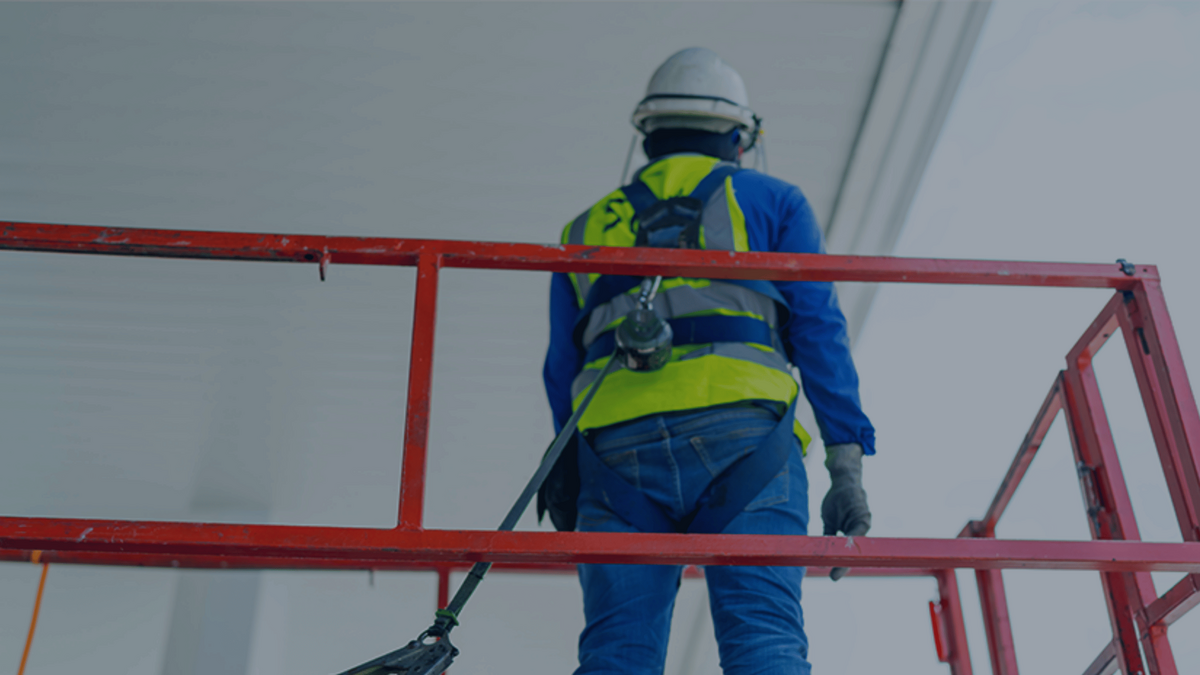
Quick answer: Fall protection training should teach workers to assess fall hazards, choose and inspect the right system, and follow a written rescue plan. In Canada, provincial OHS law requires employers to train any worker exposed to a fall hazard. The strongest programs pair that knowledge with a supervisor’s hands-on sign-off at the worksite.
Why does Fall Prevention Month matter at work?
Most workplace falls happen at floor level. The falls that kill and seriously injure workers happen at height. Parachute leads Fall Prevention Month every November, with a focus on children and older adults. For employers, it is a good month to check how ready your crews are to work at height.
In British Columbia construction alone, WorkSafeBC recorded more than 5,400 injury claims from falls from elevation between 2020 and 2024. Nearly 1,900 were serious and 35 were fatal. In 2024, WorkSafeBC issued $1,069,720 in penalties for inadequate fall protection across 152 orders.
Situations like this occur in real workplaces every year: a worker clips into an anchor no one rated, or a crew has no plan to reach someone after a fall is arrested.
What does Canadian law require for fall protection training?
Every province requires employers to identify fall hazards, control them and train exposed workers. There is no single national standard. Provincial legislation takes precedence. Examples:
- Alberta: OHS Code, Part 9. Workers must be instructed in the fall protection system and procedures before entering an area with a risk of falling. Alberta’s OHS Bulletin IJR001 says the province does not mandate how fall protection training is delivered or set qualifications for training providers.
- British Columbia: OHS Regulation, Part 11 (WorkSafeBC). The same instruction is required before work begins.
- Saskatchewan: OHS Regulations, 2020, Part 7 and Part 9. Workers must be trained on the fall protection plan and safe use of the system.
- Manitoba: Workplace Safety and Health Regulation, Part 14. Training on use, care and inspection must come from a competent person.
- Nova Scotia: Workplace Health and Safety Regulations, Part 21. Training must be delivered by a competent person and repeated at least every three years. Our certificates are valid for three years, which lines up with Nova Scotia’s retraining cycle.
- New Brunswick: General Regulation 91-191, Part VII. Training on use, maintenance and inspection must be conducted by a competent person.
- Federally regulated workplaces: Canada Occupational Health and Safety Regulations, Part 12.
As a common reference point, fall protection is typically required for work at 3 metres (10 feet) or higher. Check the threshold in your own province’s regulation.
What should fall protection training cover?
Good training goes past “wear your harness.” It should cover:
- Fall protection systems: travel restraint, fall arrest and fall restrict, and when each is the right control.
- Equipment inspection: what to check on a harness, lanyard and connector, and how often.
- Hazard assessment: spotting fall hazards and applying the hierarchy of controls to work at height.
- Warning methods and access equipment: physical barriers, platforms, ladders and work access equipment. Danatec’s Ladder and Scaffold Certification and Ladder Certification go deeper on ladders and access equipment.
- Rescue planning: a written plan for reaching a suspended worker quickly.
- Your province’s legislation: the rules that apply where the work happens.
Why does every work-at-height job need a rescue plan?
A fall arrest system stops the fall. It does not bring the worker down. If someone on your crew went into suspension this afternoon, who would reach them, with what equipment, and how fast?
Many employers cannot answer that question. A written rescue plan names the method, the equipment and the people responsible before anyone goes up. Rescue planning is part of every Danatec fall protection program.
Is online fall protection training enough on its own?
Online training covers the knowledge. It does not prove hands-on skill, and it does not replace hands-on practice.
That is why each Danatec fall protection course includes Practical Evaluation Tools. Your supervisor or competent person uses them to document and assess a worker’s competency in working safely at height, on your equipment and your tasks. Some provinces, including Manitoba, Nova Scotia and New Brunswick, require training to come from a competent person. That is someone qualified by knowledge, training and experience. The Practical Evaluation Tools give that person a way to document the hands-on assessment.
Where does Danatec fall protection training apply?
Our core program covers the fall protection principles that apply across Canada, with dedicated Alberta and BC versions built to those provinces’ legislation. The core program is the standard for workers in other provinces and for multi-province teams.
Two exceptions matter. In Ontario construction, workers need CPO-approved Working at Heights training. In Newfoundland and Labrador, training must come from a WorkplaceNL-approved provider. These courses are not those programs. They can still serve non-construction teams in Ontario, such as facilities, warehousing and manufacturing. Some work at non-construction sites can still count as construction under Ontario’s rules, so employers should confirm the work before choosing the course.
Certificates are valid for three years. Canadian Occupational Safety readers chose Danatec for the Readers’ Choice Award for Fall Protection Training in 2025 and again in 2026.
Is fall protection training changing in 2027?
Not in law, for most employers. In April 2026, federal, provincial and territorial labour ministers endorsed a plan to harmonize safety training curriculum across Canada, with a January 1, 2027 target for working at heights. Each jurisdiction decides how to implement it. Nothing becomes mandatory everywhere on that date. Labour ministers meet again on December 14, 2026, and some safety experts expect harmonization to take years, not months (Canadian Occupational Safety, October 29, 2026).
Key takeaways
- Provincial OHS law requires training for any worker exposed to a fall hazard.
- Training should cover systems, inspection, hazard assessment and rescue planning.
- Online training covers knowledge. A competent person’s sign-off covers hands-on skill.
- Ontario construction and Newfoundland and Labrador need provider-approved programs.
Frequently asked questions
How long is a fall protection certificate valid?
Danatec fall protection certificates are valid for three years. Nova Scotia requires retraining at least every three years.
How long does the online course take?
The core program takes about 3.5 hours. The Alberta and British Columbia versions take about 4 hours.
Do I need the Alberta or BC version?
If your workers are in Alberta or British Columbia, choose that version. It includes a module on the province’s legislation governing work at height.
Does online training count in Ontario?
Our online course is an option for non-construction teams in Ontario, including facilities, warehousing and manufacturing, but not for construction. Construction work in Ontario falls under different legislation that requires CPO-approved Working at Heights training. Employers should confirm that it meets their workers’ training needs and workplace requirements. Some work at non-construction sites can still count as construction under Ontario’s rules, so confirm the work before choosing the course.
Training a crew?
Set up a corporate account to manage certificates and track expiry dates in one place, with progress tracking and volume pricing for larger teams.